Oxide: Survival Island
- 4.4
- Rating
- 10.00M
- Installs
- Free
- Price

 Analysis by App-foxy
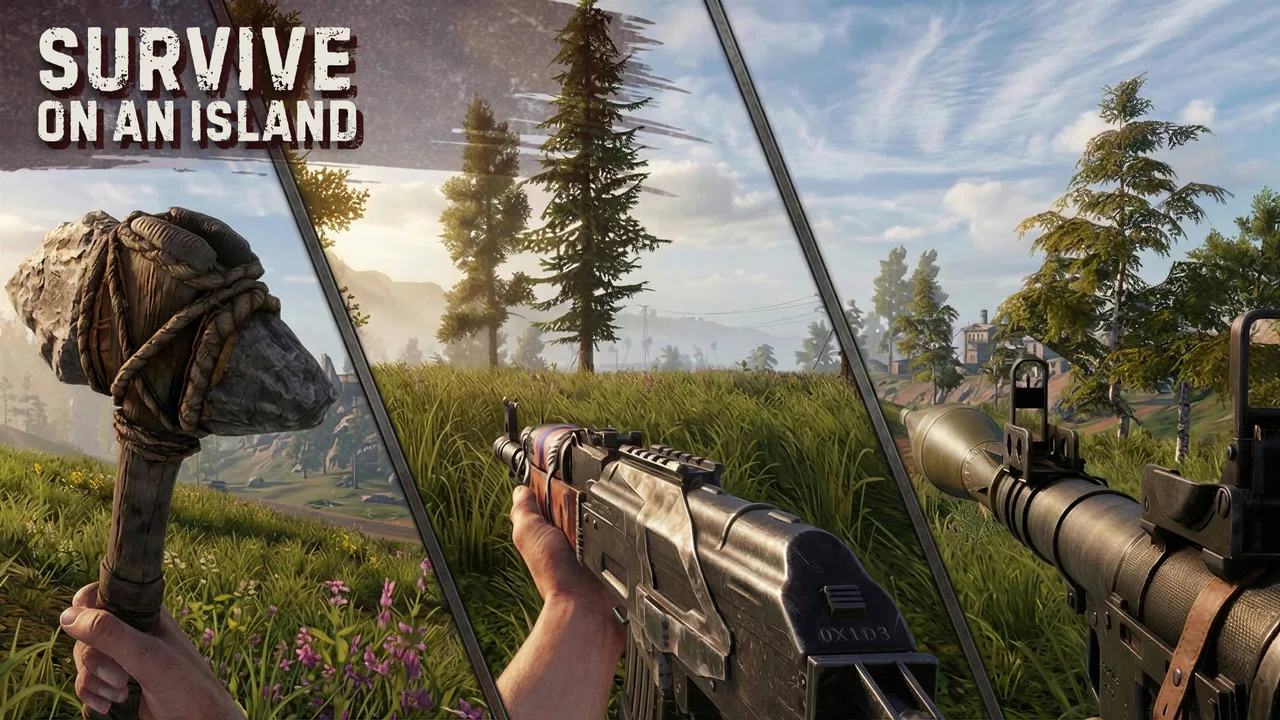
I approached Oxide: Survival Island expecting a straightforward survival game, but its real appeal is the pressure created by sharing an abandoned island with other players. It is a free simulation game from HYPERHUG, built around survival action with friends rather than a quiet, purely solo crafting routine. After spending time with it, I found that the best moments come from making small decisions under pressure: whether to explore farther, conserve what you have, or return before a simple trip becomes a serious setback.
That also explains why the game can feel rough during the first sessions. It does not immediately turn survival into a comfortable checklist. You have to learn its rhythm, understand what deserves your attention, and accept that some progress can be lost when your plan is too ambitious. For me, that tension is the reason to keep playing, although it will not suit anyone looking for a relaxed building game with constant guidance.
What makes the island difficult to settle
The opening hours are where many players are likely to get stuck. The island gives you a broad space to investigate, but freedom is not the same as clarity. I found myself asking practical questions almost immediately: what should I collect first, how far should I travel, and when is it smarter to return rather than chase one more useful item? The game becomes easier once those questions become habits, but the early learning curve can feel unforgiving.
You May Also Like

 Blood Strike: 2.5 Anniversary
Blood Strike’s Loadouts Turn Every Drop Into a Tactical Gamble
A close look at Blood Strike’s custom loadouts: how fast access to signature weapons reshapes its battle royale rhythm, rewards preparation, and narrows the gap between fights.

 Pandora - Music & Podcasts
Pandora’s Music Is Easy to Start, but Harder to Recover
Pandora’s strength is its low-effort path from a seed to a station. Its weak spot is how much confidence it asks you to place in connection, setup, and quiet recovery.

 8 Ball Pool
 Is Built on Rivalries, Rematches, and Routine
A close look at the rivalries, rematches, shared routines, and unanswered safety questions that turn a quick pool match into a persistent mobile community.

 Samsung Music
’s Quiet Strength Is Playing What You Already Own
Its reach comes less from spectacle than from dependable access to a personal library. That simplicity is both the app’s strongest retention engine and its ceiling.

 AccuWeather: Weather Radar
AccuWeather Review: A Quick, Clear Forecast for Everyday Decisions
For everyday plans, the best forecast is the one you can understand quickly. AccuWeather makes rain timing, radar, and local conditions easy to act on, with a few trade-offs.

 Hill Climb Racing
Why Hill Climb Racing Still Turns Crashes Into One More Run
A tiny car, a bumpy hill and one more upgrade: Hill Climb Racing keeps resurfacing because its simple chaos makes every near-miss feel personal.
More From Our News Desk



My first useful adjustment was to stop treating every visible resource as equally important. A survival session is not improved by carrying everything you can find if that leaves you exposed or forces a risky detour. I started each outing with a simple purpose, such as gathering materials for immediate progress or checking a nearby area, instead of wandering until my inventory and attention were both overloaded.
Playing with friends changes that decision-making considerably. A group can divide attention and make exploration feel less lonely, but cooperation only helps when everyone understands the plan. If one person moves far ahead while another stays behind without a clear role, the team can become scattered at exactly the wrong moment. I got better results when we agreed on a short objective before leaving a safe area and treated returning together as part of the objective.
This is one of the game’s less obvious strengths: multiplayer is not just a social extra. It changes the value of time, distance, and risk. A route that feels manageable alone may become inefficient when several players are moving at different speeds, while a dangerous trip can become worthwhile if the group stays focused. The trade-off is that friends cannot remove every problem. They can make mistakes together, and coordination becomes another survival task.
The game’s Teen content rating is worth keeping in mind for families. It is not the kind of gentle simulation I would automatically hand to a young child simply because it involves gathering and crafting. The survival setting and action-oriented play give it a more tense tone, so I would look at the intended player’s comfort with that atmosphere before installing it.
Where the first sessions usually lose momentum
One common mistake is confusing exploration with progress. The island invites curiosity, yet curiosity can drain the supplies and time needed for a useful return. I learned to use short trips early on, especially when I was still learning the layout and the consequences of being away from a secure base. That approach felt slower, but it produced more consistent progress than repeatedly making long journeys with no clear reason.
Another source of friction is restarting after a disappointing run. When a session ends badly, it is tempting to repeat the exact route and hope for a better result. I found that recovery works better when I change one variable at a time: shorten the route, carry a smaller goal, or bring a friend who can cover a different task. This turns failure into information instead of making it feel like a complete reset.
It is also important not to judge the game entirely from the first few minutes. The opening can feel under-explained because the enjoyment depends on learning its priorities through play. At the same time, I would not pretend that this is ideal for everyone. Players who prefer a polished tutorial, instant access to every system, or a predictable sequence of missions may find the initial uncertainty more irritating than exciting.
Setup checks before blaming the game
Before starting, I would make sure the device is running at least Android 7.1 or a compatible newer system. The current version is 1.10.11549, so keeping the installation current is a sensible first step when something behaves strangely. I would also leave enough free storage for the installation and its working space, then close demanding apps before launching. Those are simple checks, but they remove several avoidable causes of slow starts or instability.
The game is free to install, which makes trying it easy, but it includes optional purchases ranging from $0.99 to $229.99 per item. I recommend deciding in advance whether you want to spend anything. Survival games can make a player feel impatient after a setback, and that is exactly when an impulsive purchase is least useful. I would first learn the normal progression and only then decide whether any optional purchase fits the way I play.
For multiplayer sessions, I would check the basics before inviting friends into a serious run. Everyone should be using an up-to-date installation, signed into the expected account, and connected through a stable network. If one player cannot join, I would test a fresh session with the smallest possible group rather than changing several settings at once. This makes it easier to tell whether the problem is the connection, the session, or a particular device.
That kind of setup discipline matters more here than it does in a purely offline simulation. A solo player can often work around a brief interruption, but a group session creates more points of failure. One person’s connection problem can interrupt the plan for everyone, and repeated reconnecting can turn a short gaming break into a frustrating technical exercise.
I also suggest starting with a low-pressure session instead of arranging a long evening around the game. Use the first run to learn how the interface feels, how movement responds, and how comfortable the device remains during play. If the game runs well in that trial, you can then commit to longer multiplayer sessions. If it does not, you have discovered the problem before friends are waiting.
Recovering when a session goes wrong
When I lose momentum, I use a recovery routine rather than immediately abandoning the game. First, I return to the smallest achievable objective. That might mean collecting only what is needed for the next step instead of trying to rebuild everything at once. Second, I avoid repeating the same risky route without changing the plan. Third, I communicate clearly with teammates so nobody assumes that the group is still following the original objective.
This approach is especially useful after a failed multiplayer expedition. The natural reaction is often to send everyone back out immediately, but that can multiply the original mistake. I prefer to regroup, identify what caused the failure, and make the next outing shorter or more focused. The game rewards that patience because survival is less about one heroic journey than about maintaining a chain of reasonable decisions.
If the application closes, freezes, or refuses to load, I would begin with general checks: restart the game, restart the device, confirm the connection, and verify that the installation is current. If the issue continues, I would try a less demanding session and note whether the problem happens only in multiplayer or also when playing alone. That distinction is useful because it separates a general performance issue from a connection or session issue.
I would avoid immediately clearing local data or reinstalling if I am unsure how the game handles account progress. Those actions can remove locally stored information, and they should be treated as a last resort rather than routine troubleshooting. A safer sequence is to restart first, observe the pattern, and use the game’s normal account or support channels if the problem persists.
There is also a gameplay version of recovery. If a run becomes chaotic, stop adding new goals. Bring the group back together, reduce the distance you are covering, and focus on stabilizing the next few minutes. I found this more effective than trying to rescue every lost opportunity. The island is always offering another direction, but chasing all of them at once is usually what created the problem.
When the device or connection is the real issue
Not every frustrating session is caused by the game itself. If controls feel delayed only when the network is busy, I would test the game under a more stable connection before deciding that the controls are poor. If performance worsens after a long session while the device becomes hot, I would take a break and close background apps rather than assuming the installation is damaged. These observations are basic, but they prevent unnecessary changes that may not solve anything.
Multiplayer problems also deserve careful diagnosis. If every player is affected, the session or connection deserves attention. If only one person is repeatedly disconnected while others continue normally, that player’s device or network is a more likely place to investigate. Trying a short solo session can help narrow this down, because it removes the group connection from the equation.
Storage and system age can matter too. The game supports Android devices from version 7.1 onward, but that does not mean every compatible device will deliver the same experience. Older hardware may have less room for background activity, and a device with limited free space can behave unpredictably even when the operating system technically qualifies. I would treat compatibility as a starting point, not a promise of identical performance.
On iOS, I would apply the same practical logic: keep the system and game current, restart before deeper troubleshooting, and test whether the issue appears in both solo and multiplayer play. I would also avoid judging the entire experience from one poor network session. Survival games already create enough tension through their design; technical instability should be isolated before it is mistaken for intended difficulty.
These checks are not glamorous, but they help answer an important question: is the game failing, or is the device struggling with the situation? That answer affects the next decision. A network problem may be solved by changing where or when you play, while a persistent device limitation may be a reason to choose a lighter alternative.
Who should play it and who should skip it
I think this is a strong choice for players who enjoy making their own short-term plans and learning through consequences. It works particularly well for friends who like discussing what went wrong after a session and trying a smarter approach next time. The abandoned-island setting gives those conversations a clear focus: supplies, routes, timing, and whether the group took on too much.
It is less suitable for someone who wants a calm construction simulator where decorating and steady expansion are the main rewards. It is also not my first recommendation for a player who dislikes losing progress, uncertain outcomes, or the need to repeat an activity after a failed attempt. A more structured survival game with stronger mission guidance would probably be a better fit for that person.
Compared with a typical solo survival alternative, this game places more weight on shared decisions. That can make it more memorable with friends, but it also means the experience depends on their schedules and connections. Compared with a relaxed crafting game, it asks for more attention to risk and recovery. Neither comparison makes it universally better; it simply clarifies the kind of satisfaction it offers.
A realistic everyday use case is a short evening session with two friends. Instead of promising to build an enormous settlement, we might agree to gather a specific set of materials, explore one nearby direction, and return before the session ends. That limited plan gives the evening a natural shape and reduces the frustration of stopping halfway through a huge project. The game feels best to me when the group treats each outing as a small story rather than measuring success only by permanent expansion.
The game has attracted a large audience, with over ten million installs and a 4.5 average from around 335 thousand ratings. Those figures suggest that its blend of survival and multiplayer has broad appeal, but they should not override personal preference. Popularity cannot make an uncertain opening comfortable for someone who wants constant instructions, and it cannot guarantee smooth performance on every device.
HYPERHUG has kept the project in active circulation through the current version, which is another reason I would try the game rather than dismissing it after an older impression. Still, I would approach it with realistic expectations. Updates do not change the basic trade-off: the same freedom that makes the island interesting can also make the first sessions feel demanding.
My practical verdict
After using it, I see Oxide: Survival Island as a worthwhile free simulation game for players who want survival decisions to matter and who have friends ready to cooperate. Its strongest quality is the way ordinary choices become meaningful when time, distance, and group coordination are limited. I enjoyed the moments when a modest plan worked because we stayed disciplined, not because the game handed us an easy win.
The main friction is equally clear. The early experience can be confusing, multiplayer adds connection and coordination concerns, and a failed trip may feel costly if you have not yet learned how to recover. The optional purchases also deserve deliberate handling, especially for anyone who is vulnerable to spending after a setback. I would play the free version first and judge the core loop before considering anything else.
My recommendation is simple: install it if you like survival games that reward planning, experimentation, and teamwork. Begin with short outings, keep group goals specific, and use technical checks before assuming a gameplay problem is a device problem. Skip it if you want a gentle, highly guided builder or if repeated recovery feels like wasted time. For the right player, the island’s rough edges become part of the challenge; for the wrong one, they will be the reason to leave.
FAQs for Oxide: Survival Island
01What is the main objective of Oxide: Survival Island?
Oxide: Survival Island is a survival game where players are stranded on a deserted island and must gather resources, craft tools, and build shelters to survive. The main objective is to manage hunger and health, fend off wild animals, and explore the island to uncover secrets and find a way to escape.
02Is Oxide: Survival Island multiplayer or single-player?
Oxide: Survival Island offers a single-player experience, focusing on individual survival and exploration. While there is no multiplayer mode, the game provides a deep and immersive experience with challenging AI opponents and a rich, open-world environment to explore at your own pace.
03What platforms are supported by Oxide: Survival Island?
Oxide: Survival Island is available for both Android and iOS platforms, ensuring a wide range of mobile device compatibility. Players can download the game from the Google Play Store for Android devices or the App Store for iOS devices, making it accessible to a broad audience.
04Are there in-app purchases in Oxide: Survival Island?
Yes, Oxide: Survival Island includes in-app purchases. These purchases allow players to buy resources, tools, and other items that can enhance the gameplay experience. While not necessary to enjoy the game, they can provide an advantage or speed up progress for those who choose to invest.
05What are the system requirements for running Oxide: Survival Island smoothly?
To run Oxide: Survival Island smoothly, Android users should have a device with at least 2GB RAM and Android 5.0 or higher. iOS users should have an iPhone 6 or newer with iOS 10 or above. Adequate storage space is also necessary to ensure seamless gameplay and updates.
Pros
- Immersive graphics enhance gameplay experience.
- Dynamic weather adds realism to survival.
- Crafting system is intuitive and engaging.
- Multiplayer mode for collaborative play.
- Regular updates with new content.
Cons
- Occasional bugs can disrupt gameplay.
- Limited in-game tutorial for beginners.
- Resource gathering can be repetitive.
- Requires constant internet connection.
- Some in-app purchases are pricey.

Oxide: Survival Island
Gallery